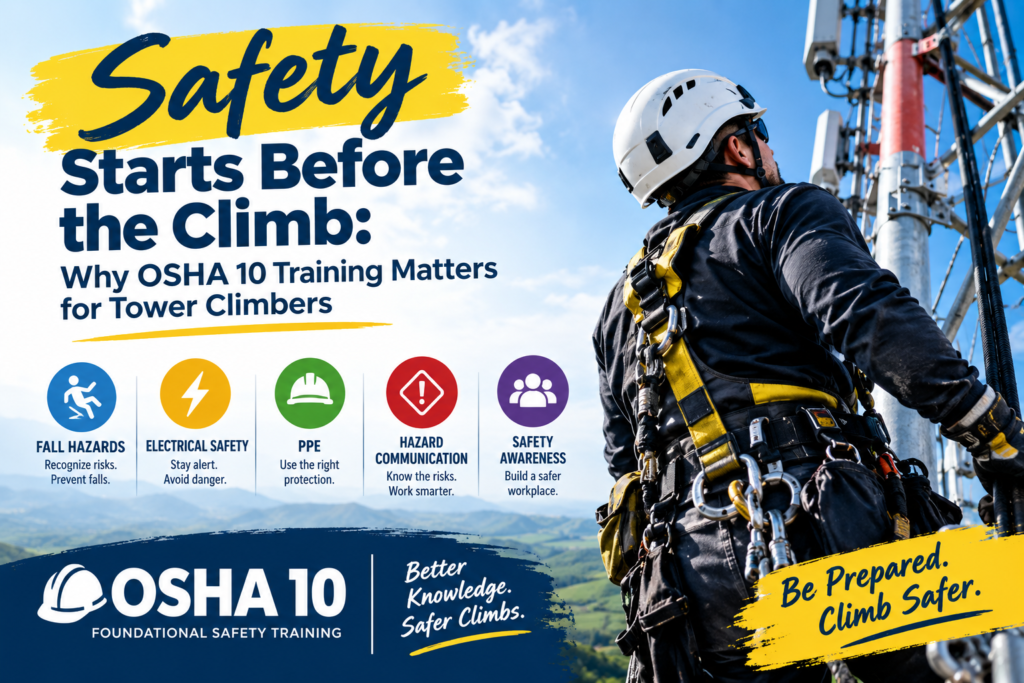
Tower climbing is a job where preparation matters. Long before a worker clips into a harness and starts ascending, they need to understand the hazards around them and the safety practices designed to reduce risk.
That’s where OSHA 10-hour training can play an important role.
OSHA 10 provides foundational workplace safety education for workers in industries such as construction and telecommunications. The course introduces common jobsite hazards and helps workers develop the awareness needed to recognize unsafe conditions before they lead to an incident.
What Does OSHA 10 Cover?
OSHA 10 training covers fundamental workplace safety topics that are highly relevant to tower climbers and other telecommunications workers. Depending on the course, topics can include:
- Fall hazards and fall prevention
Electrical hazards
Personal protective equipment (PPE)
Hazard communication
Struck-by and caught-in/between hazards
Safe use of tools and equipment
Workers’ rights and employer responsibilities
For someone entering the tower industry, this provides a useful foundation for understanding how safety is managed on an active jobsite.
Why Safety Training Matters in Tower Work
Tower climbers operate in an environment where hazards can change quickly. Work may involve significant heights, changing weather, electrical equipment, heavy tools, rigging operations, RF exposure, and crews performing multiple tasks at the same time.
Recognizing those hazards is only part of the job. Climbers also need to understand when conditions are unsafe, follow established procedures, use equipment correctly, communicate with the rest of the crew, and stop work when a hazard needs to be addressed.
OSHA 10 helps establish that mindset early.
OSHA 10 Is a Starting Point, Not Tower-Climbing Certification
It’s important to understand what OSHA 10 does—and what it doesn’t do.
Completing OSHA 10 does not by itself qualify someone to climb or perform specialized tower work. Tower climbers may need additional employer- or job-specific training in areas such as:
- Fall protection
Climbing techniques
Tower rescue
Rigging
RF awareness
First aid and CPR
Equipment inspection
Site-specific safety procedures
Requirements can vary depending on the employer, project, job responsibilities, and type of tower work being performed.
Think of OSHA 10 as part of the foundation. Specialized training, hands-on experience, proper supervision, and continued education build on top of it.
Building a Career Around Safety
For someone trying to break into the tower industry, completing OSHA 10 can also demonstrate initiative. It shows prospective employers that a candidate has already invested time in learning basic occupational safety principles and understands that tower climbing is more than being comfortable with heights.
For experienced climbers, safety education doesn’t stop after the first course or certification. Equipment changes. Worksites change. Procedures and industry practices evolve. The strongest tower professionals continue learning throughout their careers.
Ultimately, the safest climb starts on the ground—with preparation, proper equipment, a clear plan, and a crew willing to identify and address hazards before anyone leaves the ground.
For more information about tower climbing, training, careers, jobs, and resources for professionals in the telecommunications tower industry, visit TowerClimber.com.