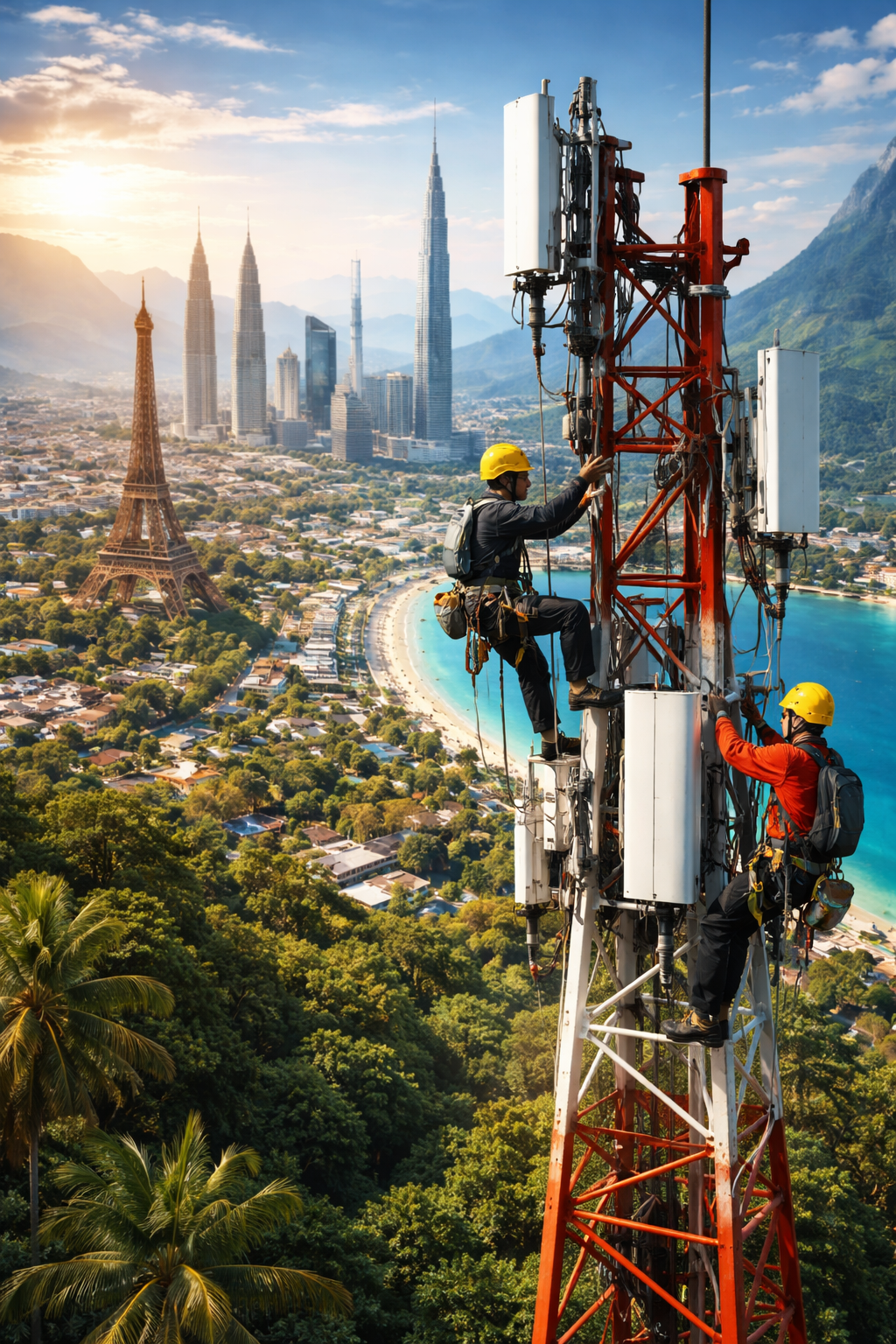
Across the globe, the tower-climbing industry plays a critical role in building and maintaining telecommunications infrastructure, much like it does in the United States. Countries in Asia, Europe, Africa, and Australia are investing heavily in cellular and radio networks as demand for connectivity grows, particularly with 5G deployments and broadband expansion. This global investment fuels widespread opportunities for technicians who climb and service towers, especially in regions with rapid urban growth or underserved rural areas. International infrastructure firms and telecom operators often need skilled climbers to install antennas, maintain equipment, and ensure network uptime in diverse environments.
One of the biggest differences outside the U.S. lies in safety standards and regulatory frameworks. While American climbers often work under clear OSHA and ANSI rules, other countries may follow different or evolving safety codes — sometimes aligned with EU, ISO, or local occupational health systems. Climbers internationally often pursue globally recognized certifications such as IRATA (Industrial Rope Access Trade Association) or GWO (Global Wind Organisation) that demonstrate competency in fall protection and rope access across borders. Employers hiring internationally value these credentials because they help unify training and safety best practices in places where local regulations might be less developed or vary significantly from country to country.
For tower climbers looking beyond the U.S., there are emerging career opportunities and unique challenges. Some professionals relocate for project-based work or longer contracts, especially in countries with skilled-labor shortages or high infrastructure growth. However, climbers often need to navigate visa requirements, language differences, and local workplace cultures to succeed — and they may have to retrain locally even if they already hold U.S. experience and certifications. Despite these hurdles, the global industry offers adventurous technicians the chance to work on cutting-edge networks in a variety of climates and settings, expanding both their expertise and career horizons.